

Recognizing signs and symptoms
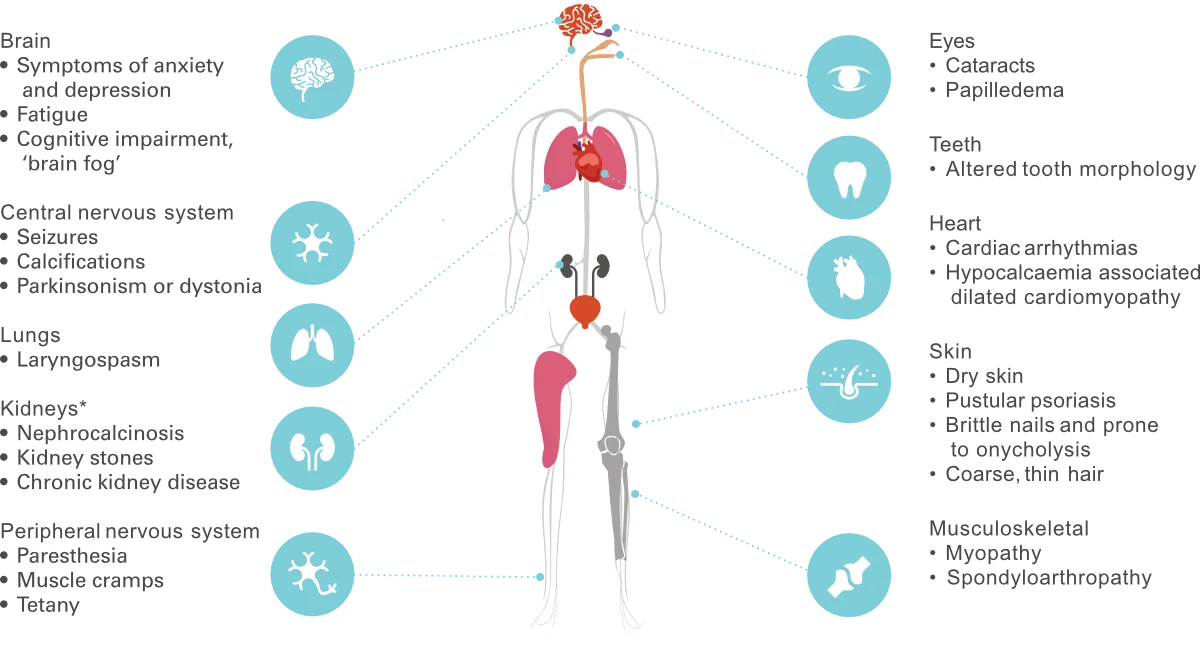
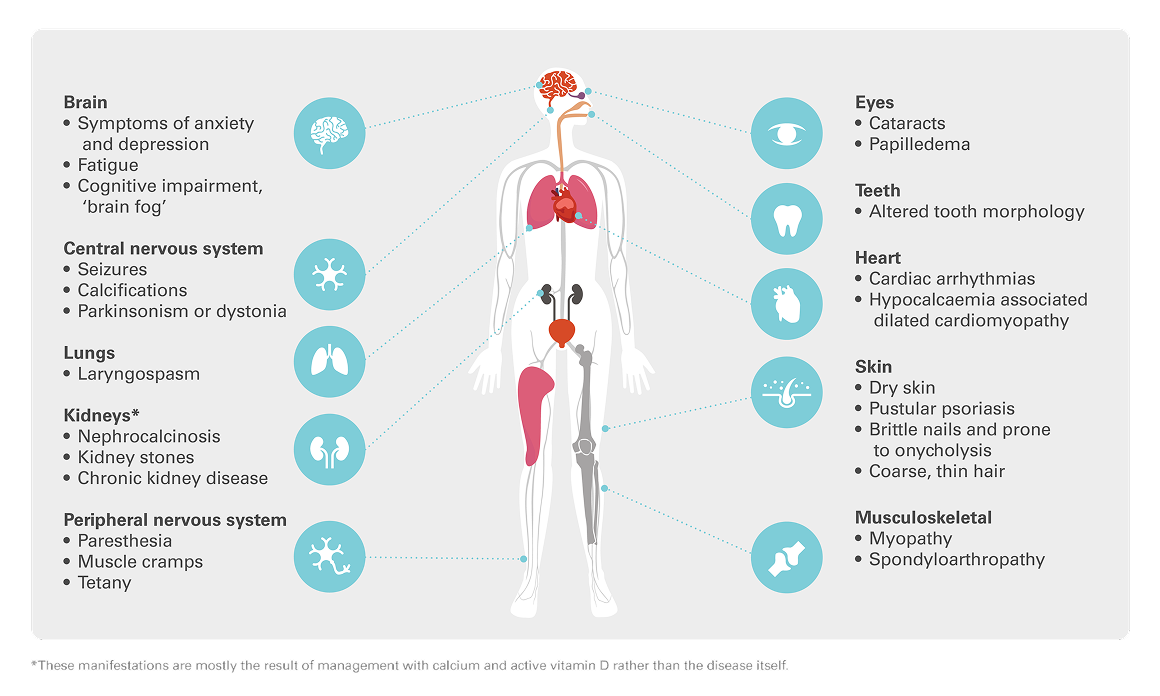
Hypoparathyroidism (also known as hypopara), can affect numerous systems in the body and is associated with a range of short-term symptoms and long-term complications. These include neuromuscular irritability, kidney complications, calcification outside of the bone, and cognitive impairment.2,3,4,8

Recognizing signs and symptoms
Hypoparathyroidism (also known as hypopara), affects numerous systems in the body and is associated with a range of short-term symptoms and long-term complications. These include neuromuscular irritability, kidney complications, calcification outside of the bone, and cognitive impairment.2,3,4,8
Recognizing signs and symptoms

Signs and symptoms of hypoparathyroidism
Hypoparathyroidism (also known as hypopara), affects numerous systems in the body and is associated with a range of short-term symptoms and long-term complications. These include neuromuscular irritability, kidney complications, calcification outside of the bone, and cognitive impairment. 2, 3, 4, 8
Below are some of the body systems where an imbalance of PTH levels may have an impact, along with potential signs and symptoms: 2
Tab 1 content.
Tab 2 content.
Hypoparathyroidism is caused by insufficient levels of PTH (parathyroid hormone) in our body’s systems. Below are some of the primary body systems where insufficient PTH levels may have an impact, along with the potential signs and symptoms people may experience.2
Brain
- Symptoms of anxiety and depression 2, 4
- Fatigue 2, 4
- Cognitive impairment, ‘brain fog’ 2
Brain
- Symptoms of anxiety and depression 2, 4
- Fatigue 2, 4
- Cognitive impairment, ‘brain fog’ 2
Central nervous system
- Seizures 2
- Calcifications 2
- Parkinsonism or dystonia 4
Peripheral nervous system
- Paresthesia 2
- Muscle cramps 4
- Tetany 2
Eyes
- Cataracts 2
- Papilledema 4
Teeth
- Altered tooth morphology 4
Skin
- Dry skin 4
- Pustular psoriasis 4
- Brittle nails and prone to onycholysis 4
- Coarse, thin hair 4
Heart
- Cardiac arrhythmia 2
- Hypocalcemia associated dilated cardiomyopathy 4
Lungs
- Laryngospasm 2
Kidneys
- Nephrocalcinosis 2
- Kidney stones 2
- Chronic kidney disease 4
Musculoskeletal
- Myopathy 4
- Spondyloarthropathy 4
Brain
- Symptoms of anxiety and depression2, 4
- Fatigue2,4
- Cognitive impairment, ‘brain fog’2
Central nervous system
- Seizures2
- Calcifications2
- Parkinsonism or dystonia4
Peripheral nervous system
- Paresthesia2
- Muscle cramps4
- Tetany2
Eyes
- Cataracts2
- Papilledema4
Teeth
- Altered tooth morphology4
Skin
- Dry skin4
- Pustular psoriasis 4
- Brittle nails and prone to onycholysis4
- Coarse, thin hair4
Heart
- Cardiac arrhythmia2
- Hypocalcemia associated dilated cardiomyopathy4
Lungs
- Laryngospasm2
Kidneys
- Nephrocalcinosis2
- Kidney stones2
- Chronic kidney disease4
Musculoskeletal
- Myopathy4
- Spondyloarthropathy4
Brain
- Symptoms of anxiety and depression 2, 4
- Fatigue 2, 4
- Cognitive impairment, ‘brain fog’ 2
Central nervous system
- Seizures 2
- Calcifications 2
- Parkinsonism or dystonia 4
Kidneys
- Nephrocalcinosis 2
- Kidney stones 2
- Chronic kidney disease 4
Peripheral nervous system
- Paresthesia 2
- Muscle cramps 4
- Tetany 2
Heart
- Cardiac arrhythmia 2
- Hypocalcemia associated dilated cardiomyopathy 4
Skin
- Dry skin 2
- Pustular psoriasis 4
- Brittle nails and prone to onycholysis 4
- Coarse, thin hair 4
Brain
- Symptoms of anxiety and depression 2, 4
- Fatigue 2, 4
- Cognitive impairment, ‘brain fog’ 2
Central nervous system
- Seizures 2
- Calcifications 2
- Parkinsonism or dystonia 4
Lungs
- Laryngospasm 2
Kidneys*
- Nephrocalcinosis 2
- Kidney stones 2
- Chronic kidney disease 4
*These manifestations are mostly the result of management with calcium and active vitamin D rather than the disease itself. 4
Peripheral nervous system
- Paresthesia 2
- Muscle cramps 4
- Tetany 2
Eyes
- Cataracts 2
- Papilledema 4
Teeth
- Altered tooth morphology 4
Heart
- Cardiac arrhythmia 2
- Hypocalcemia associated dilated cardiomyopathy 4
Skin
- Dry skin 4
- Pustular psoriasis 4
- Brittle nails and prone to onycholysis 4
- Coarse, thin hair 4
Musculoskeletal
- Myopathy 4
- Spondyloarthropathy 4
Keeping track of your symptoms may help you understand your condition better and support you in your conversation with your health care provider. Here are some useful tools to keep you on track.
Hypopara overview
Bone mineral density
a measurement of the amount of minerals (mostly calcium and phosphorus) that are in a certain volume of bone9
Calcifications
when calcium builds up in the body tissues, causes them to harden10
Calcium
a mineral essential for healthy bones, teeth, other body tissue, nerve and cell function12
Cognitive impairment
a range of problems with a person’s ability to think, learn, remember, and make decisions11
Hyperphosphatemia
when the level of phosphate in your blood is too high15
Hypocalcemia
when the level of calcium in your blood is too low14
Neuromuscular irritability
a symptom of acute hypocalcemia causing spasm and twitching of the muscles and nerves2,4
Phosphate
an essential electrolyte in the human body13
Renal impairment
when the kidneys are not working properly (this can be to different degrees of functionality)16
GL-COMMPTH-2600045 | June 2026